
Identify Who Owns a Twin Falls County Property
Twin Falls County offers no single owner-search page that settles the whole question. The ArcGIS map converts an address into a parcel identifier. Assessor staff can then confirm the roll entry. The Clerk/Auditor/Recorder can check the filed conveyance. Follow the records in that order.
- Search the county parcel map by address and copy the full
PARCEL_ID. - Ask the Assessor to identify the owner of record for that APN and whether an update is pending.
- Give the owner name, APN, legal description, and estimated transfer date to the recorder, then request the latest deed.
- Compare the deed's grantee and legal description with the mapped parcel and roll entry.
This route pins down the recorded interest more reliably than a street number alone. Rural deeds often omit the street address. A parcel can also keep its legal description after addresses change.
Start the Twin Falls County Owner Route on the Map
The parcel app takes partial address text through PM_PROP_AD and partial parcel text through PARCEL_ID, with up to six results each. Check the outline, imagery, road, and subdivision before choosing a match. The office behind the search appears on the official Assessor page, which lists the custodian's contact routes.
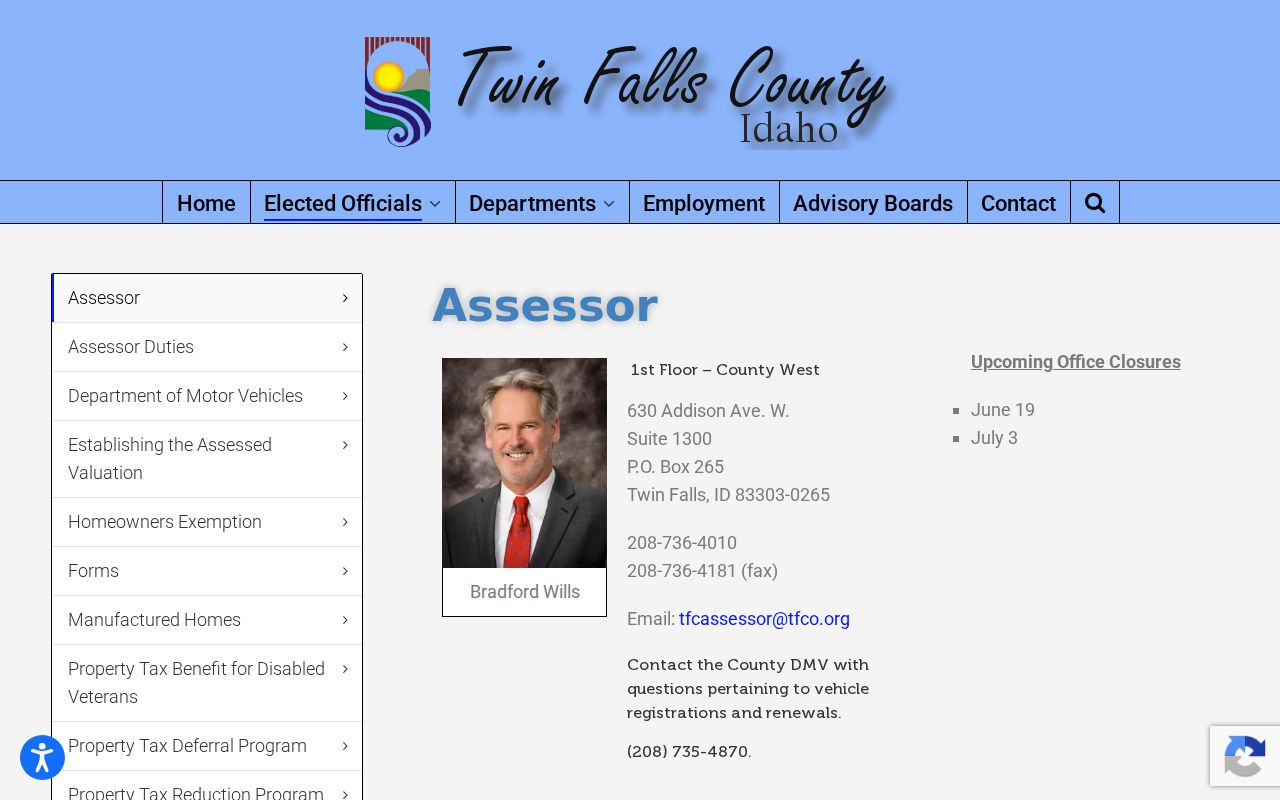
The map shows the custodian, not the owner of a specific parcel. Confirming that still takes an APN-based check with the Assessor. Copy letter prefixes and suffixes exactly. Townsite APNs begin with RPT, Buhl APNs with RPB, and Kimberly APNs with RPK, while rural identifiers carry township and range. Rural identifiers carry township and range. The county publishes no official decoding key, so preserve the value as written.
Compare Twin Falls County Ownership Sources
Each source answers a different slice of the ownership question. The GIS map identifies the land, the tax roll reports the assessment name, and the deed records the transfer. An entity search explains a business name without proving its beneficial owners.
| Where ownership is shown | What it gives | Access and timing |
|---|---|---|
| Assessor roll | Owner of record tied to the APN | Confirm with staff; no public owner-card form was verified |
| Recorder deed | Grantee, capacity, date, and legal description | Latest recorded instrument checks a stale roll |
| County GIS | Mapped parcel and APN | Free viewer; owner field was not verified |
| Idaho SOSBiz | Entity and registered-agent filings | Does not disclose all beneficial owners |
The county site posts no clearly labeled current grantor-grantee index. Call 208-736-4004 or visit 630 Addison Avenue West, second floor. Bring the APN, legal description, names, instrument type, date range, and copy type.
Separate Twin Falls County Mailing and Situs Clues
The situs address locates the land for GIS and permits. The mailing address is where notices go. It can be a post-office box, an agent, an escrow service, or another residence entirely. A differing mailing address may help trace a trust or estate, but it does not prove where the property owner lives.
- Owner of record
- The name carried on the assessment roll.
- Grantee
- The person or entity receiving an interest in a deed.
- Title
- The legal interest, which one database name alone does not establish.
- Situs address
- The property location, distinct from the notice mailing address.
Trace the Twin Falls County Owner to the Latest Deed
Ask recorder staff to run both grantor and grantee indexes. Distinguish a recorded document from one merely cited in court. Compare the instrument number or book and page. Note the recording date, party capacities, legal description, APN, return address, and any prior-instrument reference. Details matter here. Gift, family, trustee, estate, and tax-deed transfers may carry nominal or no useful consideration.
For older deed records, the FamilySearch collection offers direct and reverse deed indexes covering 1915 through 1974. It also includes deeds from 1906 through 1941. Treat it as a historical aid. It is not the current official index for Twin Falls County deed records.
Note: The latest recorded deed is the legal-record check when the Assessor entry appears older than a recent closing.
Identify Twin Falls County LLC, Trust, and Estate Names
An LLC can hold title. The tax bill often goes to a manager or service address. SOSBiz confirms the entity and its registered agent. It does not show every person who benefits from the land. Search the exact legal name and common abbreviations. Then match the APN and the deed description.
For a trust, check the trustee, successor trustee, trust name, and certificate references. For an estate, try the decedent, "estate of," and the personal representative. Then review any distribution deed. Sort out same-name people with initials, parcel geography, signatures, and mailing clues.
Distinguish Ownership From Twin Falls County Land-Use Approval
A permit, zoning decision, or subdivision agenda may name an applicant or project owner. That still does not certify who owns the parcel. Cities approve local planning actions. Final plats and many land instruments are filed with the county recorder instead. A city mailing address can even sit outside city limits. It can also fall inside an area of impact.
Use planning material to cross-reference the project name, APN, description, and plat. Then return to the Assessor and the recorder for the ownership question itself. The current property owner guide narrows the focus to the present roll entry.
Know the Limits of a Twin Falls County Owner Lookup
A roll name is not a title opinion. It is not proof of occupancy, either. Nor does it prove that every interest and lien has surfaced. A life estate can split present and future interests, a trustee can hold title in a stated capacity, and a recent transfer can precede a roll update.
Use owner data lawfully. Ownership records support purchase research, estate work, boundary questions, and civic review. Never use them to stalk, intimidate, or harass a person.
Idaho public-record law keeps some personal details private. Safe at Home may substitute a protected mailing address for qualifying participants, and specific confidentiality rules still apply. Confirm the interest with the proper custodian.
Give Twin Falls County Staff a Searchable Owner Request
A broad request can stall at the counter. Rural deeds in Twin Falls County sometimes carry no street number, and one owner may hold several parcels under a single name. So bring the clerk something precise. Give the exact APN, the legal description, current and former names, the likely instrument type, and a narrow recording-date window. Ask that both the grantor and grantee indexes be searched. Request a clear answer on whether each document was recorded, referenced inside another file, or simply absent.
Check Interests Beyond the Named Twin Falls County Owner
The current deed never tells the whole story. Mortgages, reconveyances, liens, lis pendens, and easements can all sit against the parcel without appearing on that one instrument. Search Twin Falls County recorder records by owner name variants and by legal description. Business owner? Idaho SOSBiz offers UCC search access too. Remember, a financing statement is not a real-property lien. A registered agent is not the owner of record.
Read “Previous Owner” in Twin Falls County Tax-Deed Notices
A tax-deed notice from the county can carry several useful details. You may see a parcel number, the legal description, the street address, a minimum bid, and a line labeled previous owner. Treat that label carefully. It marks a step in the tax-deed process, not a full chain of title. Twin Falls County moves toward a tax deed only after three years of unpaid real-property taxes. It sells no tax-lien certificates along the way.
Auctions of tax deeds run as-is, with no takebacks. When you are weighing who owns a delinquent parcel, line up the notice beside the treasurer's account status. Check the instruments on file with the recorder, and any action the county has taken. A name printed in a notice proves only that the county sent it. It does not prove that person still holds title today.
Record the Twin Falls County Ownership Answer With Its Date
A Twin Falls County tax-deed notice usually lists a parcel ID and legal description. It also names the physical address, previous owner, and minimum bid. Treat "previous owner" as a process label. It is not a shortcut for reconstructing title. The county starts the tax-deed process after three years of real-property delinquency. It sells no tax-lien certificates. Auctions run as-is and final. For a delinquent parcel, compare the notice, the treasurer's status, recorder instruments, and county action. A name printed in a notice does not prove that person still holds the property.