
Read the Twin Falls County Owner-of-Record Card
The Twin Falls County Assessor discovers, lists, and values taxable property, and its public page links to a parcel map. The office publishes no verified online parcel card, so treat any checklist as a request list rather than a promise of every field. The Assessor page shows the custodian route for owner-of-record questions.
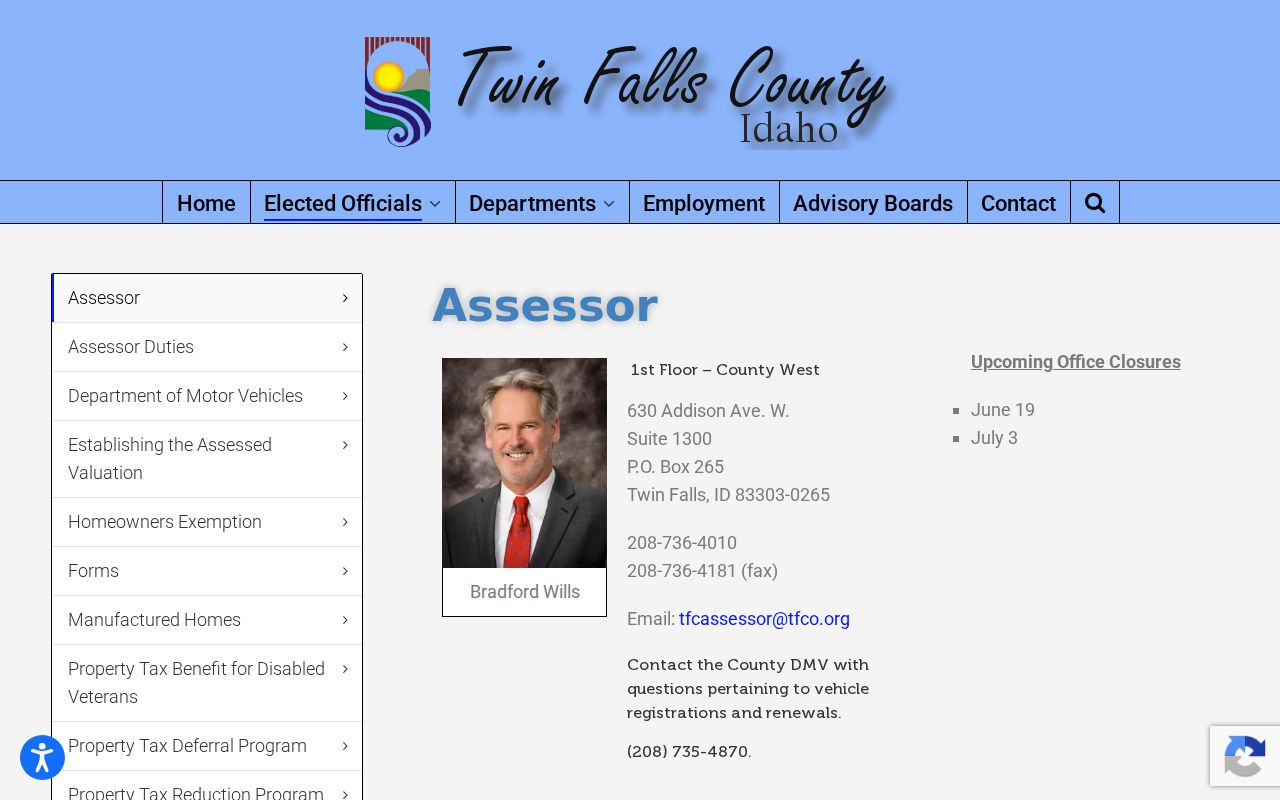
The card shows the office route for Twin Falls County owner-of-record details. It does not itself prove who owns a specific parcel.
| Owner name | Ask for the party now carried on the assessment roll. |
|---|---|
| Mailing address | Notice destination, which may differ from the property. |
| Situs address | Physical location used to match the mapped tract. |
| Parcel/APN | Stable cross-reference for map, Assessor, and recorder requests. |
| Last sale or deed reference | Not verified in the public card; request confirmation if available. |
| Assessment year | Date context for deciding whether the roll may trail a transfer. |
Call 208-736-4010 or email tfcassessor@co.twin-falls.id.us. You can also visit Suite 1300 at 630 Addison Avenue West with the APN in hand. When the deed date is newer than the assessment year, ask whether the owner entry is pending an update.
Check How Current the Twin Falls County Roll Is
Twin Falls County publishes no official refresh cadence or average lag for its roll. Assume nothing about daily or weekly updates. Compare the deed recording date against the assessment and tax-notice year, then ask the Assessor whether a transfer is still awaiting processing.
Recent-sale check. A roll can trail a closing. The newest recorded deed is the more current legal-record source when the assessment name looks stale.
A June assessment notice and a later tax bill are different calendar events. A sale after the assessment date can leave an issued value or bill unchanged. The current owner may have changed anyway.
Confirm the Current Twin Falls County Owner
Start with the roll as the present-tense answer. Use the recorder to confirm it. The county site offers no clearly labeled current deed-index search, so staff help or an in-person request belongs in any safe workflow.
- Search the county ArcGIS map by address and copy the complete parcel ID.
- Confirm the present owner-of-record name with Assessor staff.
- Contact the Clerk/Auditor/Recorder with the APN, legal description, name, and estimated transfer date.
- Compare the newest deed's grantee, capacity, recording date, and legal description with the roll.
- Owner of record
- The party shown on the current assessment roll.
- Assessment roll
- The Assessor's listing of taxable property and related account information.
- Recording lag
- The interval between deed filing and a later roll update; no county average was verified.
- Vesting capacity
- The role in which a grantee takes an interest, such as trustee or entity.
Compare Twin Falls County Situs and Mailing Addresses
The situs is where the land sits, feeding GIS, permits, and emergency addressing. The mailing address routes tax notices. It may be a post-office box, agent, lender, or out-of-county address. A mismatch between them is common. It does not prove anyone's occupancy.
The Treasurer notes that owners change their address through the Assessor. A missed bill does not excuse delinquency. That split makes the Assessor the channel for a mailing correction. Meanwhile, the Treasurer handles the bill itself.
Verify a Twin Falls County Entity Owner
When the current owner is an LLC, run the exact entity name through Idaho SOSBiz. Try its abbreviations there too. A registered agent is a filing contact, not proof of beneficial ownership. Match the entity to the deed and APN before concluding anything.
For a trust, read the trustee's stated capacity and certificate references. For an estate, check the personal representative and any later distribution deed. A life estate can split current and future rights. A short roll label compresses that split.
Confirm a Just-Recorded Twin Falls County Deed Offline
Visit the recorder on the second floor at 630 Addison Avenue West or call 208-736-4004. Give staff the full APN, current name, legal description, instrument type, and a recording-date estimate. Ask whether the document was recorded, merely referenced, or never filed.
The historical FamilySearch collection helps with older ownership research. Its direct and reverse indexes stop at 1974, though. It cannot confirm today's latest instrument.
Note: Keep the recorder's instrument number or book and page beside the APN so the current owner result can be reproduced.
Use Twin Falls County Current Owner Data Lawfully
The public owner record supports purchase inquiries, estate matters, boundary questions, and tax corrections. It does not show who lives at the situs address. Idaho confidentiality laws can also protect some address information.
Lawful use. A mailing address may be used for legitimate property contact. Never use current owner information to stalk, intimidate, or harass anyone.
A current owner record is not a title opinion, and it never proves every lien or future interest was found. The broader owner-finding route shows how the map, Assessor, and recorder fit together.
Use the Twin Falls County APN as the Present Key
The county map takes partial parcel-number text and auto-selects the first of up to six results, so verify the location before copying the APN. Keep every prefix and suffix intact. Confirmed examples include RPT for a Twin Falls townsite tract, RPB for Buhl, and RPK for Kimberly. Rural identifiers visibly carry township and range. The county publishes no decoding guide. Prefixes such as PP, T1, OC, or O1 can belong to other sub-rolls. Ask whether the identifier is the real-estate parcel. After a split or combination, retain any predecessor number too.
Read the Newest Twin Falls County Instrument as a Current Record
On the first page and its continuations, check the instrument number, recording timestamp, grantor and grantee names, stated capacities, legal description, parcel number, notary acknowledgment, return address, prior reference, signatures, and exhibits. A short index entry shows less. Expect only names, document type, date, and book and page.
Capacity changes what a name means. Someone signing as trustee, personal representative, corporate officer, or attorney-in-fact may not own the property individually. Read the granting clause and grantee capacity. Never lift one signature straight into the current-owner field.
Keep the Twin Falls County Owner Record in Scope
Three offices split the job. The Twin Falls County Assessor discovers, lists, and values taxable property. The Treasurer collects the tax and will email or mail a copy of the bill since it is not posted online. The recorder handles conveyances. Because duties divide this way, confirming the current owner of record in Twin Falls County can mean contacting more than one office. Even so, each property record carries the same APN.
Permit and zoning files may list an applicant, a contractor, or a project. Those labels prove nothing about present ownership. A tax mailing address is only a contact clue, not proof of where someone lives. Anchor your answer to the name on the assessment roll and the newest recorded deed.
Request a Twin Falls County Current Owner Record Precisely
A records request asks for documents that already exist. Idaho's Public Records Act does not oblige staff to build a fresh owner report. It also does not settle a title dispute. Name the custodian clearly, then supply the parcel number, document type, party names, address, date range, and the format you want. Copying and labor costs may apply.
For Twin Falls County land records, contact the recorder directly. Do not route a state-agency form to the county. When a deed record cannot be found, ask staff about an alternate legal name, an unindexed spouse, a predecessor APN, or a filing under a trustee. Any of these might explain the gap.
Document the Twin Falls County Current Owner Check
Keep notes as you go. Record the roll year and the date staff confirmed the name. Note the APN and the exact legal description. Save the newest instrument number, the recording timestamp, and the grantee's capacity. If the deed and the tax roll disagree, save both names. Ask for the office's explanation too. That short audit trail reveals whether your answer rests on a dated assessment entry. A later conveyance can also be the culprit.
Never swap a trust or an entity for an individual pulled from a mailing contact. The owner of record stays the grantee named in the instrument. A later filing is what changes that interest.